


医科学専攻
- Master's Courses
修士課程 - Doctoral Courses
博士課程
Laboratory Animal Medicine 医用動物学
STAFF
Professor
-
Kitamura, Hiroshi Professor.D.V.M., Ph.D. 北村 浩 教授 (兼任)
Other Faculty / Staff
-
Hayashi, Himeka
Assistant Prof..Ph.D. 林 姫花 助教
CONTACT
TEL:+81-22-717-8175
E-MAIL:hiroshi.kitamura.d8*tohoku.ac.jp
(「*」を「@」に変換してください)
OUTLINE
Our laboratory is located within the Institute for Animal Experimentation Facility affiliated with the Graduate School of Medicine. In conjunction with the development of DEEL (Database of Environmental Enrichment for Laboratory Animals)—a database of environmental enrichment measures designed to promote the welfare of laboratory animals—we are investigating the effects of environmental enrichment on animals. We also generate and analyze genetically modified animals to investigate the roles of the proteins encoded by their genes. In particular, we are investigating the role of USP2—which regulates protein ubiquitination—in energy metabolism, as well as the functions of novel molecules expressed in macrophages that were identified using multi-omics technologies. At the same time, we are studying the roles of various tissues and organs by developing chimeric animals in which tissues or organs from one species have been replaced with those from another. We will utilize these new animal resources, obtained through developmental engineering techniques, to establish novel research and evaluation approaches that contribute to the promotion of the 3Rs by comparing and integrating them with alternative methods to animal testing, which have seen remarkable development in recent years.
私たちの研究室は医学系研究科附属動物実験施設内にあります。実験動物の福祉を推進するための環境エンリッチメントのデータベースであるDEEL(Database of Environmental Enrichment for Laboratory animals)を構築するのに併せて、環境エンリッチメントが動物に与える影響を検証しています。また、遺伝子改変した動物を作製・解析し、その遺伝子のコードするタンパク質の役割を調べています。特にタンパク質のユビキチン化を制御するUSP2のエネルギー代謝に果たす役割や複合オミックス技術で見出されたマクロファージに発現する新規分子の機能を調べています。一方で、様々な組織・臓器を他の動物に置き換えたキメラ動物を開発することで、組織・臓器の役割も研究しています。これら発生工学の手法で得られた新たな動物資源は、昨今開発が目覚ましい動物実験代替法と比較・融合することで、3Rsの推進に繋がる新たな研究・評価アプローチの構築に活用します。
-
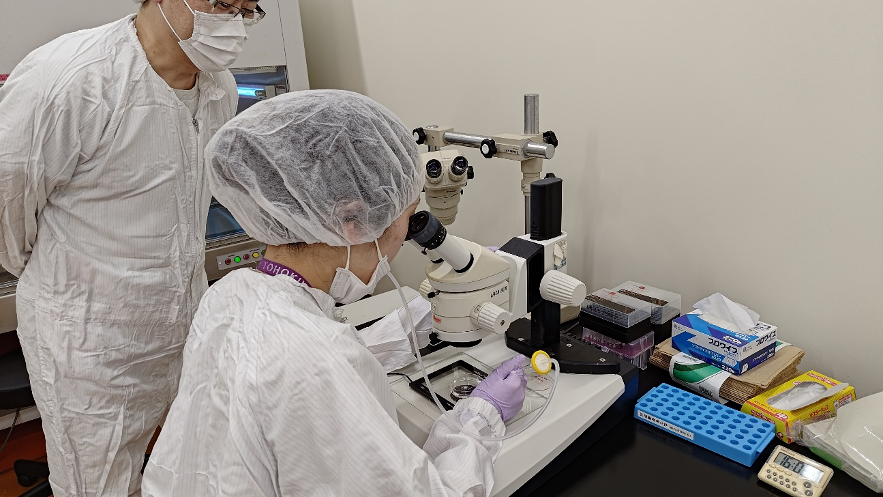
Generation of human disease model animals by developmental engineering
ヒト疾患モデル動物の作製現場 -
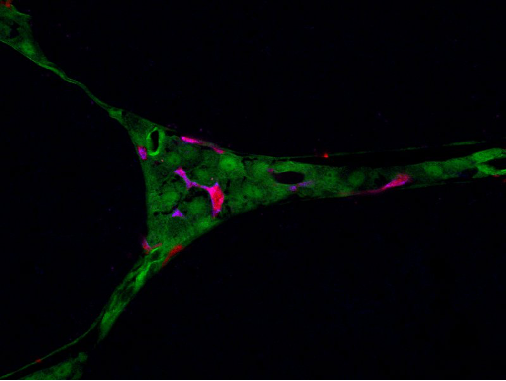
Visualization of testicular macrophages by gene-modification
精巣マクロファージの可視化 -
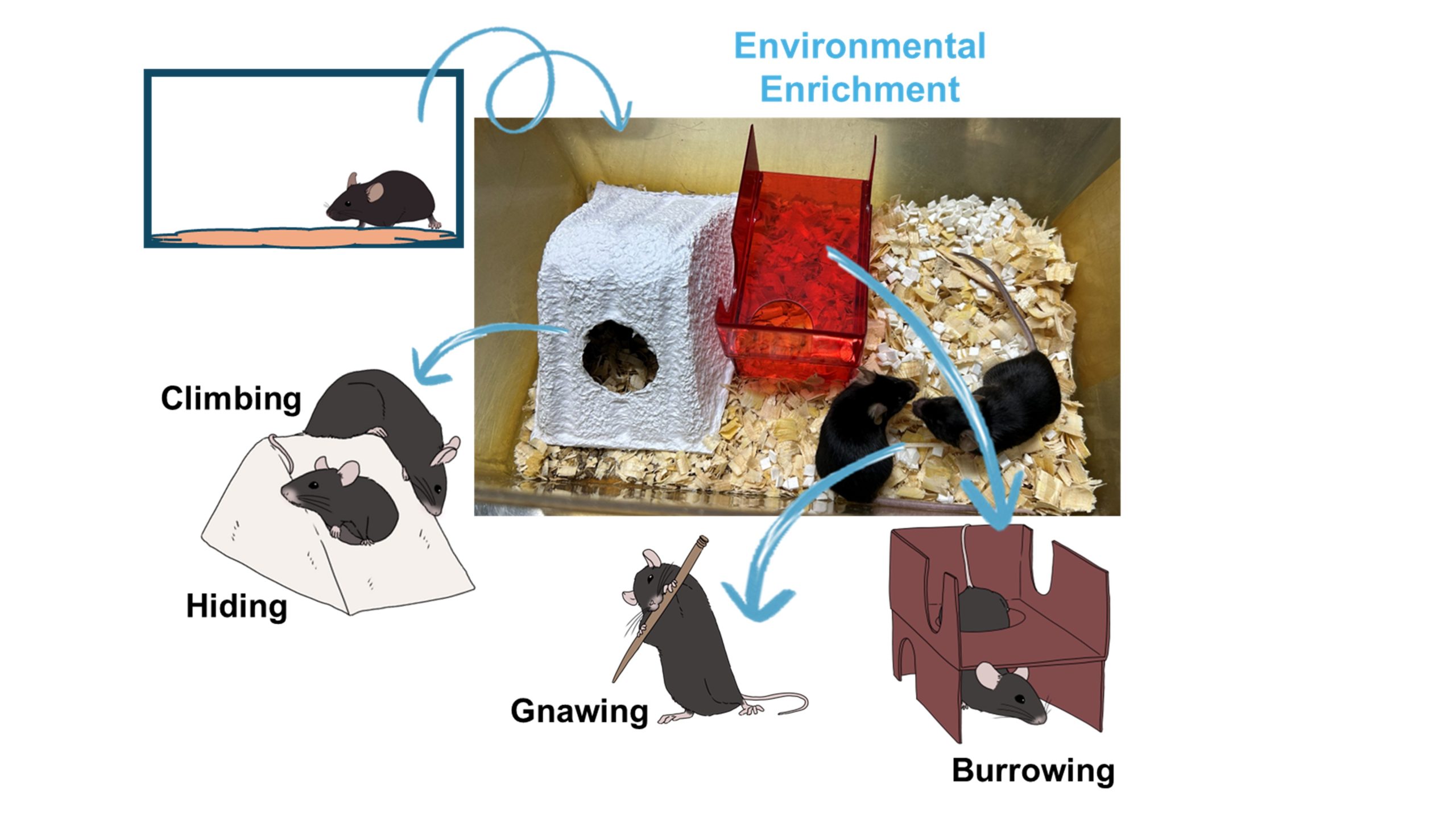
Several goods for environmental enrichment of mice
マウスの様々な環境エンリッチメントグッズ
ARTICLE
Kitamura H et al. Ubiquitin-specific protease 2 (USP2) as a modulator of energy metabolism: A review of studies using animal and cellular models. Biomedicines 14(4) 783: 2026
URL:
https://doi.org/10.3390/biomedicines14040783
Kitamura H. Ubiquitin-specific proteases (USPs) and metabolic disorders. Int J Mol Sci. 24(4):3219, 2023
URL:
https://www.mdpi.com/1422-0067/24/4/3219
Hashimoto M, et al. Ubiquitin-specific protease 2 in the ventromedial hypothalamus modifies blood glucose levels by controlling sympathetic nervous activation. J Neurosci. 42(23):4607-4618, 2022
URL:
https://www.jneurosci.org/content/42/23/4607.long
Hashimoto M, et al. Macrophage ubiquitin-specific protease 2 contributes to motility, hyperactivation, capacitation, and in vitro fertilization activity of mouse sperm. Cell Mol Life Sci. 78(6):2929-2948, 2021
URL:
https://link.springer.com/article/10.1007/s00018-020-03683-9
Saito Y, et al. Identification of therapeutic targets for quiescent, chemotherapy-resistant human leukemia stem cells. Sci Transl Med. 2(17)17ra9, 2010
URL:
https://www.science.org/doi/10.1126/scitranslmed.3000349
